- Nom du rédacteur
- Francis Généreux
Principal Economist
Economic News
United States: Modest Job Creation Caps a Turbulent Year
January 9, 2026
Highlights
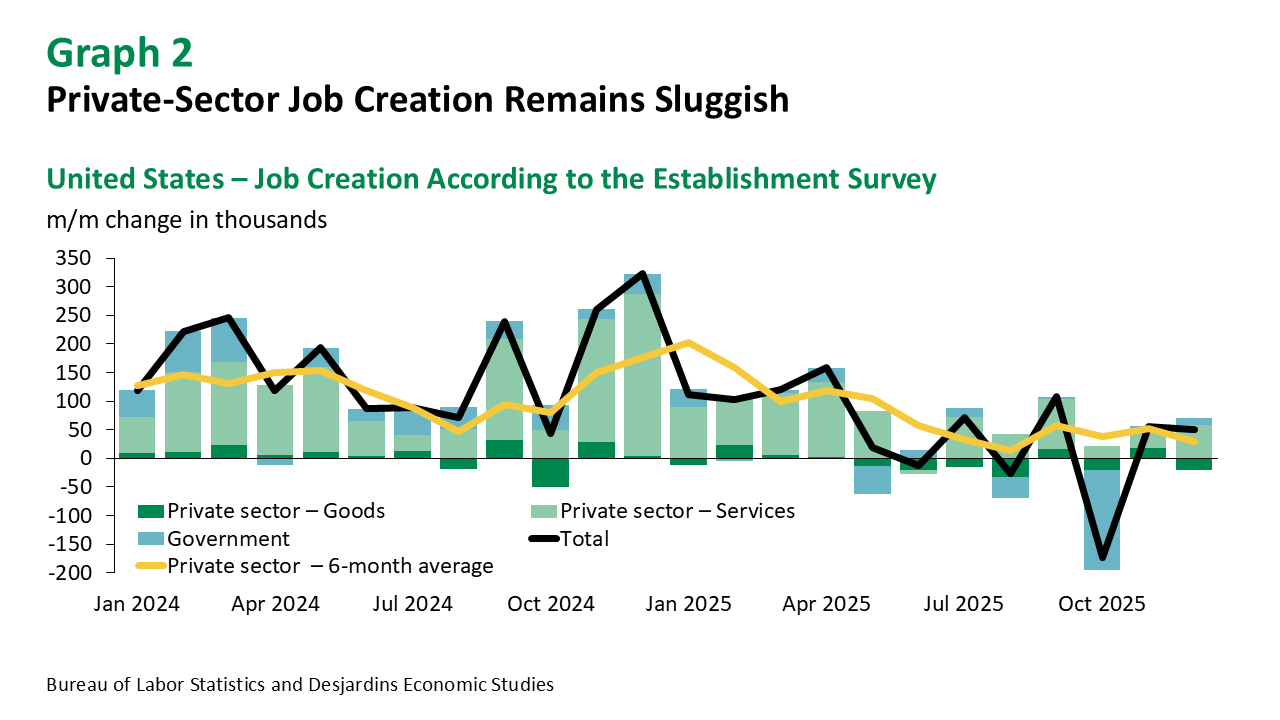
- The establishment survey shows a net gain of 50,000 jobs in December, following 56,000 in November (revised from +64,000) and 173,000 layoffs in October (revised from -105,000).
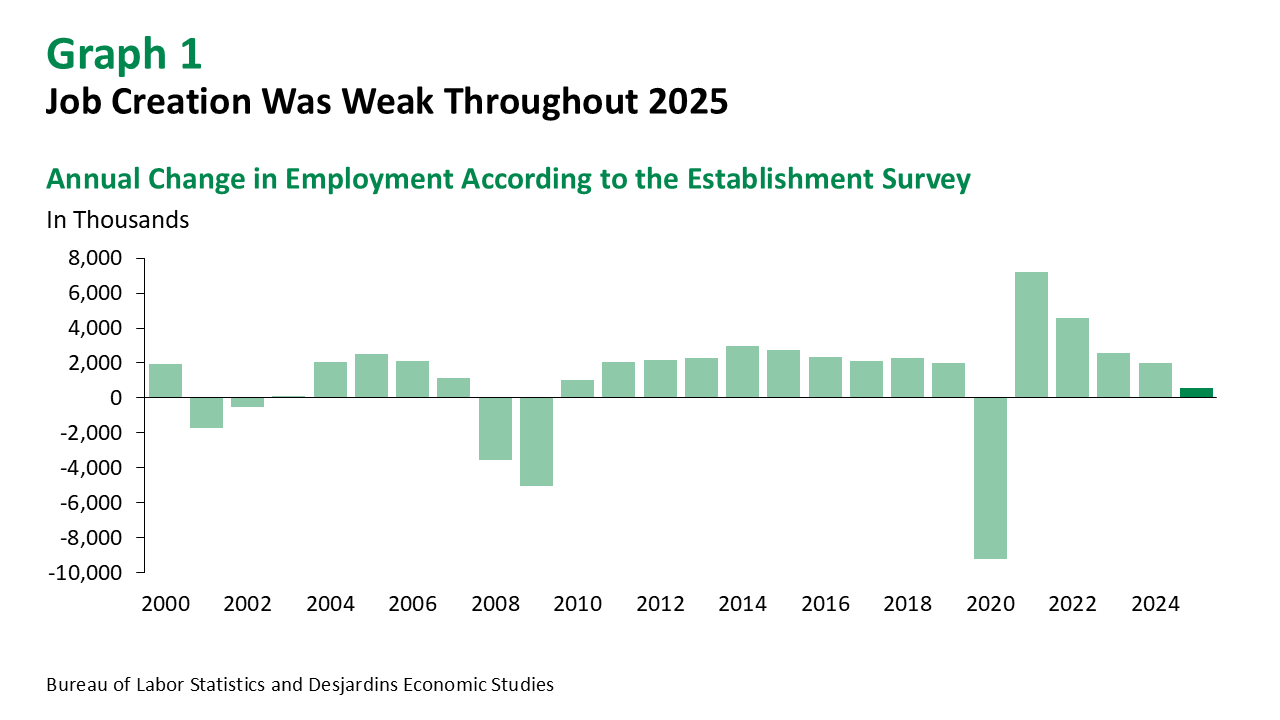
- For the full year 2025, employment rose by 584,000 (December to December), compared with 2,012,000 in 2024 and 2,594,000 in 2023.
- Average hourly earnings increased 0.3% in December, with an annual change of 3.8%.
- The unemployment rate edged down in December from 4.5% (revised from 4.6%) to 4.4%.
Comments
December’s employment report is more typical after the volatility caused by the budget impasse and federal government layoffs. The labour market is advancing slowly, even in the private sector. Over the past three months, private payrolls grew by fewer than 30,000 jobs on average, compared with 177,000 during the same period in 2024. This slowdown is evident in the annual job creation figures: 2025’s total of 584,000 jobs is the weakest since 2009, excluding 2020, which was severely impacted by the pandemic. Without an official recession, we have to go back to 2003 to find such low annual gains. The picture is similar when excluding federal cuts and focusing solely on private employment. Note that next month’s annual benchmark revision will lower employment levels through March 2025 (the preliminary estimate for this revision is -911,000 jobs).
In December, only 50.8% of the 250 tracked industries posted monthly job gains—the lowest share since last August. The rebound in construction seen in November reversed, and manufacturing continued to shed jobs. Among services, retailers, wholesalers, transportation and warehousing firms, and temporary help services all reduced headcounts. These losses were offset by gains in health care and food services. Notably, the federal government added 2,000 workers in December, its first monthly increase in 2025, though annual losses total 274,000.
The household survey, which was heavily disrupted by the budget standoff and lacks October data, provides the first monthly changes since September. It shows a gain of 232,000 jobs in December, combined with a 46,000 decline in the labour force, helping to lower the unemployment rate. This survey is generally much more volatile than the establishment survey.
Implications
Beyond the disruptions caused by the budget impasse and federal workforce cuts, the US labour market has clearly lost momentum. So far, the administration’s efforts to revive manufacturing have yielded little progress. The uncertainty surrounding the US economic outlook should prompt Federal Reserve policymakers to keep interest rates unchanged at their next meeting. However, if inflation shows no significant upward pressure from tariffs and job creation remains sluggish, calls for additional rate cuts could intensify sooner or later.