
- Nom du rédacteur
- Sonny Scarfone
Principal Economist
Economic News
Quebec: A Second Consecutive Decline in GDP in May
August 26, 2025
Highlights
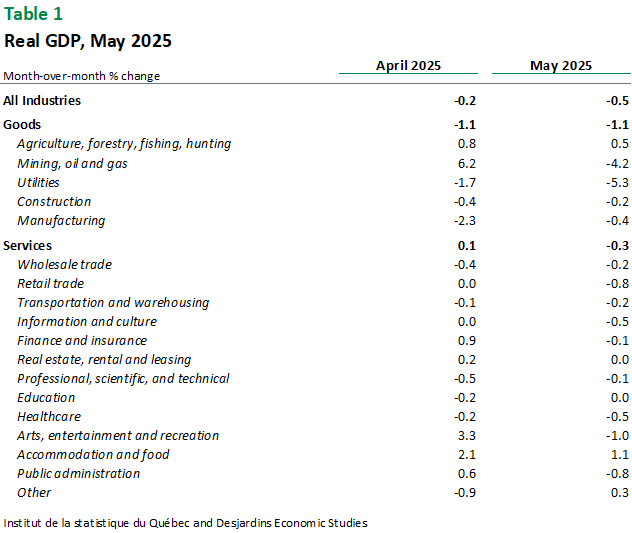
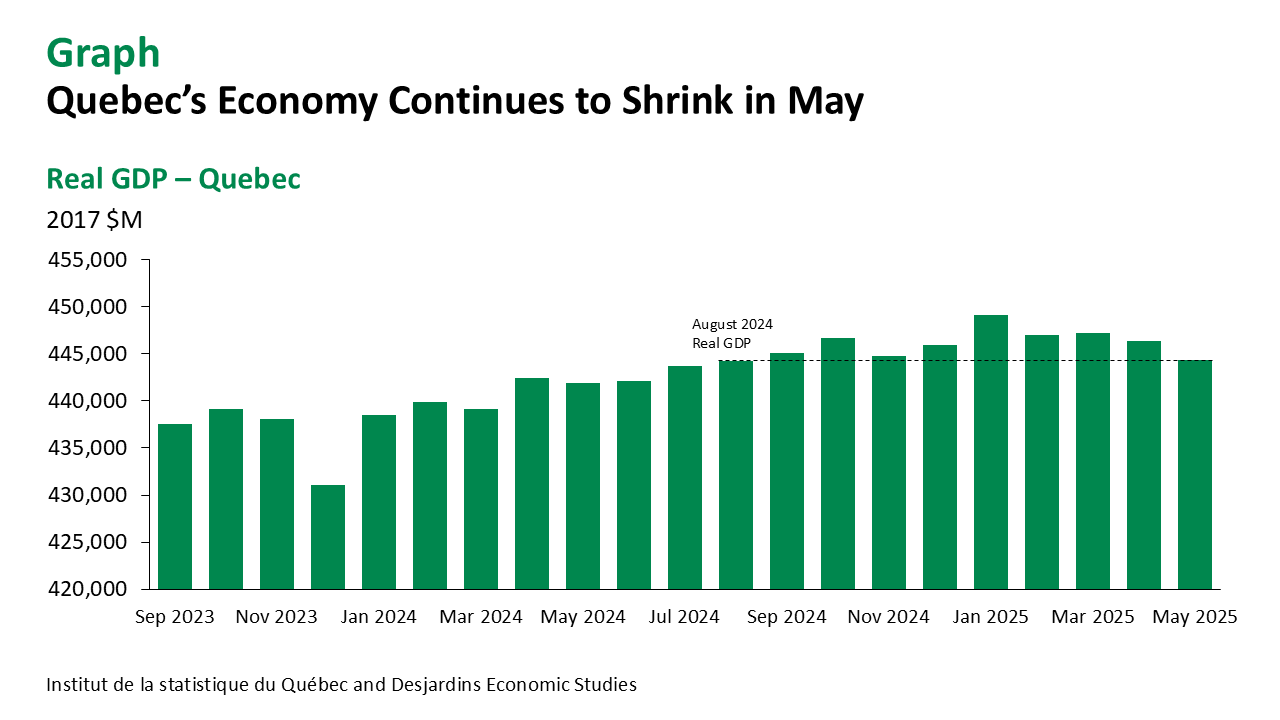
- Quebec’s real GDP contracted by 0.5% in May, once again posting a steeper decline than the national average External link., which edged down by 0.1%. The pullback was broad-based, with 14 of the 18 major sectors recording lower activity levels (see Table 1). As a result, the province’s economic output has returned to the level observed in August 2024, effectively erasing several months of gains.
- Weakness in utilities and the public sector accounted for more than half of Quebec’s GDP contraction in May. A significant portion of the decline came from lower electricity generation, transmission and distribution. Public services also contributed notably, with reduced activity in education, health care and public administration.
Comments
Economic activity in Quebec continued to weaken, marking a third decline in four months. Since peaking in January, the province’s real GDP has contracted by 1.1%, pointing to a gradual yet persistent slowdown. This downturn is unfolding against a backdrop of ongoing trade uncertainty with our main economic partner, with several key issues still unresolved. The impact of this uncertainty is evident in the widespread weakness across goods-producing industries, as well as in wholesale trade, transportation and warehousing—all of which posted declines through the spring.
Among the few bright spots in May, the accommodation and food services sector stood out for its resilience. This momentum may have continued into the summer months, as many Canadians opted for
domestic travel External link..
Implications
Quebec’s economy continues to operate at a subdued pace, and today’s GDP data are consistent with other indicators such as household and business confidence, as well as labour market conditions. According to our latest forecasts External link., a contraction in the second quarter is expected to give way to a modest rebound in the third quarter. This recovery should be supported in part by a stabilization in certain export-oriented sectors benefiting from exemptions under CUSMA, along with sustained activity in the construction sector.