- Nom du rédacteur
- Laura Gu, Senior Economist • Kari Norman, Senior Economist
Newfoundland and Labrador budget
Newfoundland and Labrador: Budget 2026–27
A Rock and a Hard Place
April 29, 2026
Highlights
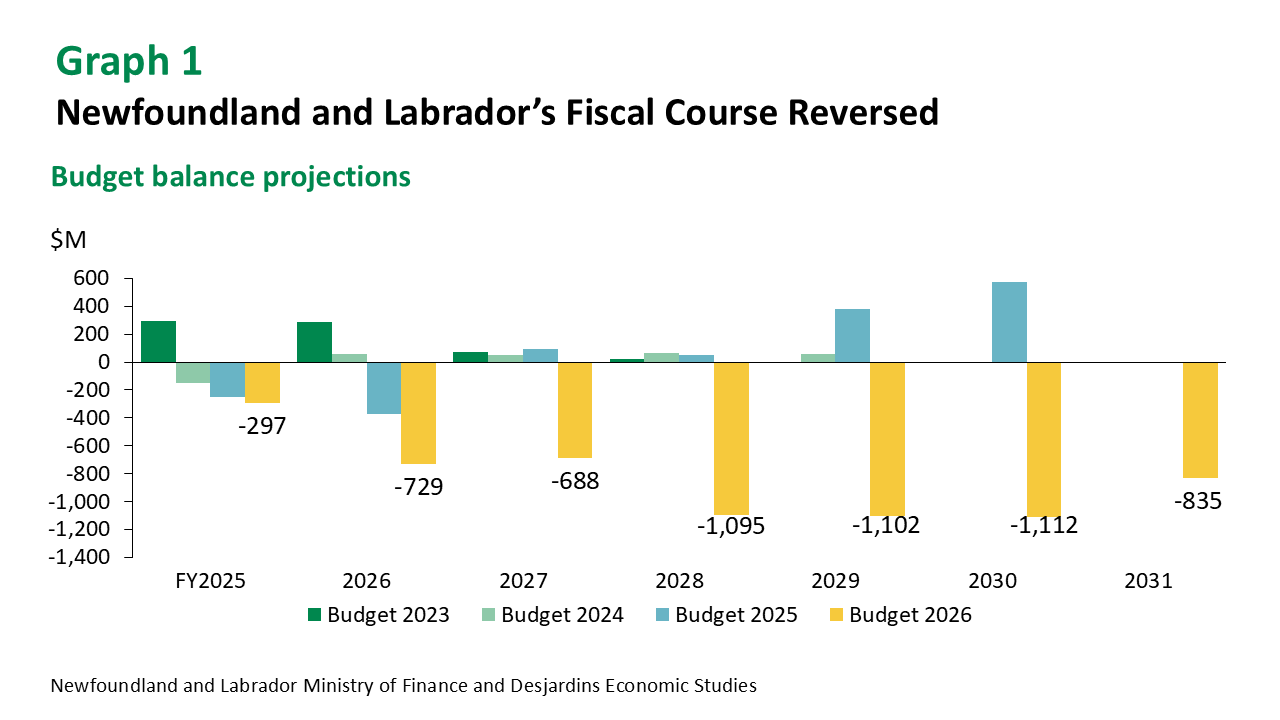
- NL’s fiscal year 2026–27 (FY2027) budget abandons the projected FY2027 return to balance, posting a $688M deficit (1.4% of nominal GDP) that widens to $1.1B (2.2%) and remains in place through FY2030 (graph 1). Table 1 summarizes the province’s updated fiscal forecasts.
- Lifted near‑term nominal growth driven by robust exports from higher oil and mineral output helps contain the net debt‑to‑GDP ratio in the short run. However, the medium‑term trajectory remains concerning given sustained deficits, leaving the province with the highest debt burden among Canadian provinces for the foreseeable future.
- Revenue projections for FY2027 are largely intact, with growth of 1.5% supported by higher offshore royalty revenues. Beyond that, revenue growth has been revised lower to reflect a weaker medium‑term economic outlook, contributing to the sizable deficits.
- The budget raises its Brent crude price assumption to US$79/barrel in FY2027, roughly US$10/barrel below our baseline forecast and well below current spot prices. This leaves material upside risk to the fiscal outlook should oil prices remain higher for longer.
- While the government has reversed previously planned spending cuts, expenditure growth remains subdued and below that of other provinces. New policy measures are largely incremental and focused on affordability.
- NL’s return to red ink rests on relatively conservative assumptions but faces heightened uncertainty. Risks appear tilted to the upside given supportive global oil dynamics and the province’s recent ramp-up in offshore production capacity. That said, maintaining spending restraint remains critical to prevent further deterioration in an already elevated debt burden.