
- Nom du rédacteur
- Kari Norman
Economist
Economic News
Canadian Travellers Continued to Shun the US in September 2025
November 20, 2025
Highlights
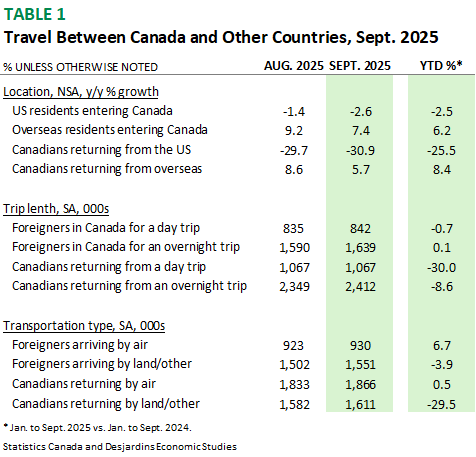
- The number of Canadian residents returning from trips to the US fell 30.9% y/y in September 2025, while the number of trips to Canada by US residents declined 2.6% y/y.
- Meanwhile, the number of Canadian residents returning from trips overseas rose 5.7% y/y in September, while the number of trips to Canada by overseas residents was up 7.4% y/y. See table 1 for details.
Comments
September 2025 marked the end of a three-month summer streak in which more US residents travelled to Canada than Canadians ventured south of the border. The last time this occurred outside of the pandemic was June 2006. Year-to-date, the number of Canadians returning from trips to the US has plunged more than 25%, while visitors from the US have eased only 6%. Overall, 468k fewer visitors from the US have come to Canada this year compared with the same period last year, but this has been largely offset by an additional 318k visitors from overseas.
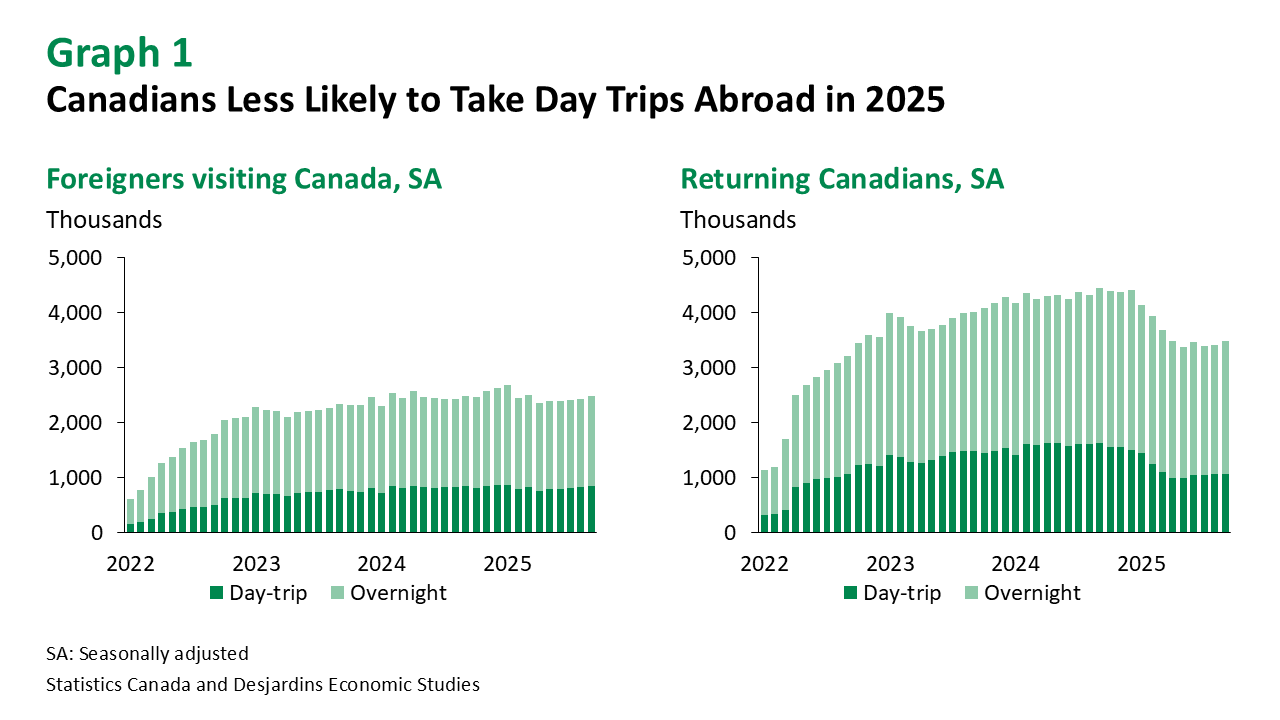
The steep decline in Canadian travel was concentrated in day trips (graph 1, right). The sharp drop in trips by Canadian residents to the US—particularly by car—possibly suggests shifting travel and “Buy Canadian” preferences. Some of the remaining day trips may represent Canadians living in border towns who work in the US. Air travel, by contrast, has held up better, suggesting that business or essential trips may have been less affected than leisure travel. With 7.6M fewer trips from Canadians to the US so far this year, it seems more Canadians are spending their vacation time overseas—up 846k as compared to the same period a year ago—or vacationing and shopping at home.
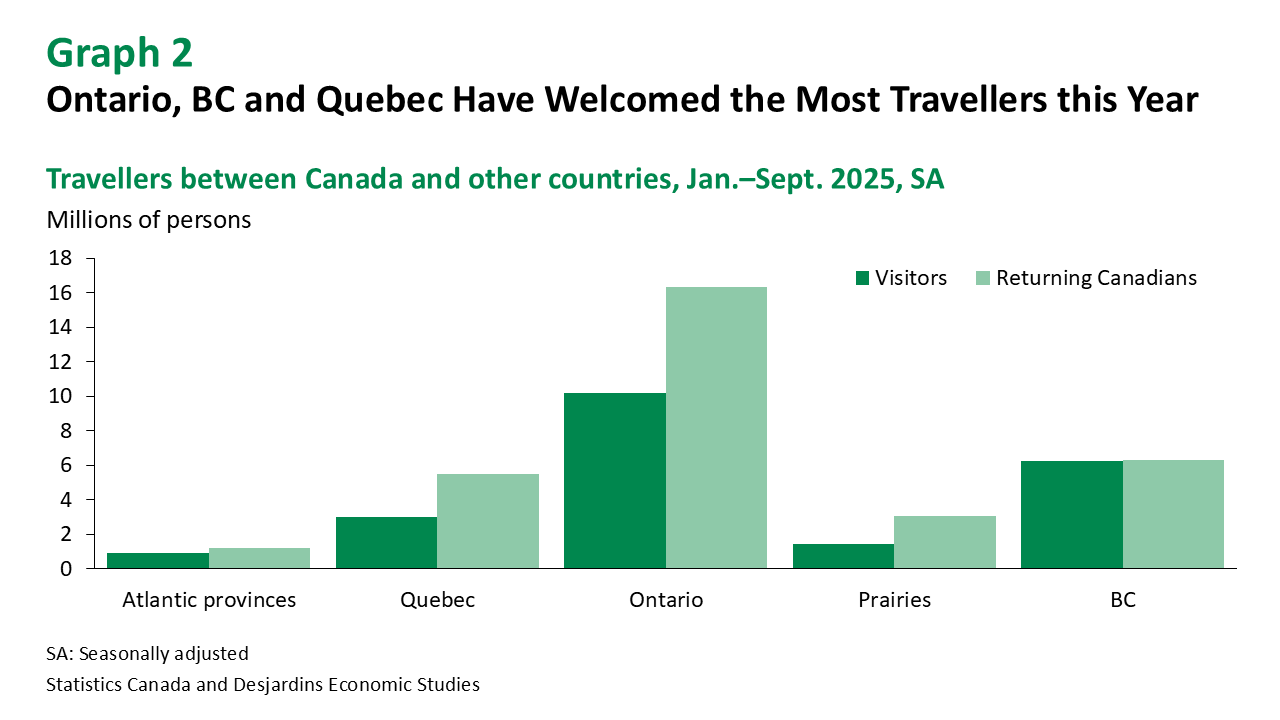
Regionally, Ontario has welcomed the largest share of international visitors, yet even more Ontarians have travelled abroad (graph 2). In British Columbia, the balance is tighter, with foreign arrivals roughly matching the number of BC residents heading abroad.
Implications
The sustained drop in cross-border travel carries nuanced economic consequences. For Canada’s tourism sector, fewer outbound trips could redirect spending toward domestic tourist destinations, potentially benefitting hospitality and retail sectors, especially in regions that typically lose spending to US border towns. And while the data on domestic tourism is limited, what information we have suggests that this is the case. For instance, employment and output in tourism-related sectors were materially higher than a year earlier through August. More localized industry data point to a similar trend. Conversely, even a modest decline in US visitors to Canada may weigh on tourism-dependent communities, particularly in Ontario and BC, which draw the most American visitors. However, to date, this doesn’t appear to be outweighing the positive impulse from domestic travel and overseas visits.