
- Nom du rédacteur
- Kari Norman
Economist
Economic News
Canada: August’s New Listings Surge Opens the Door for Fall Homebuyers
September 15, 2025
Highlights
- Home sales in Canada rose by 1.1% month over month in August.
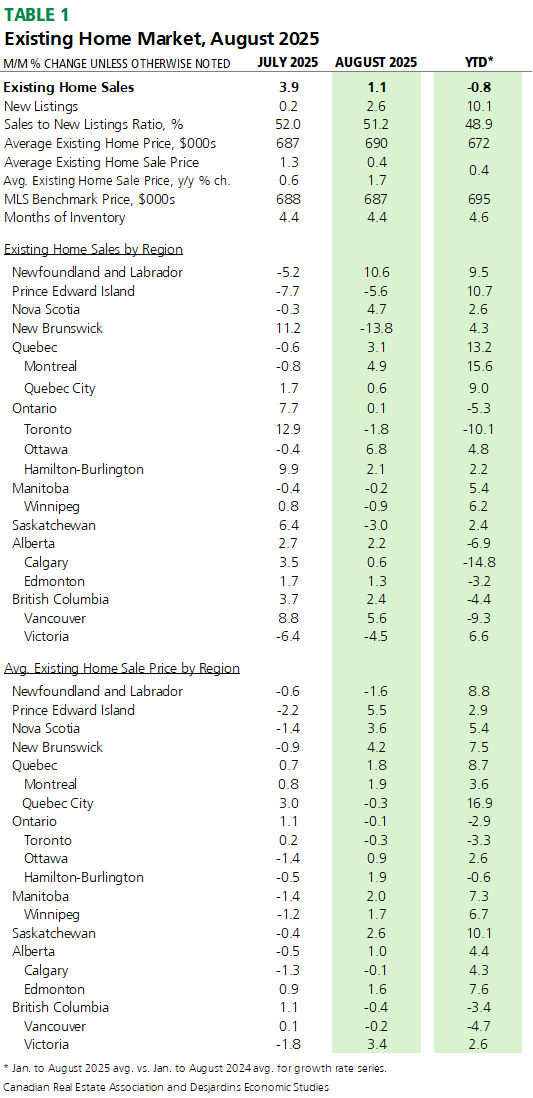
- The average sale price rose 0.4% m/m, while the benchmark price was flat. Both remain well below their historic peaks reached in 2022. Table 1 summarizes key data points.
Comments
August saw continued growth in home sales, making this the fifth straight month of gains. Sales have now risen to about the mid-range of seasonal norms, and slightly higher than the past three August prints.
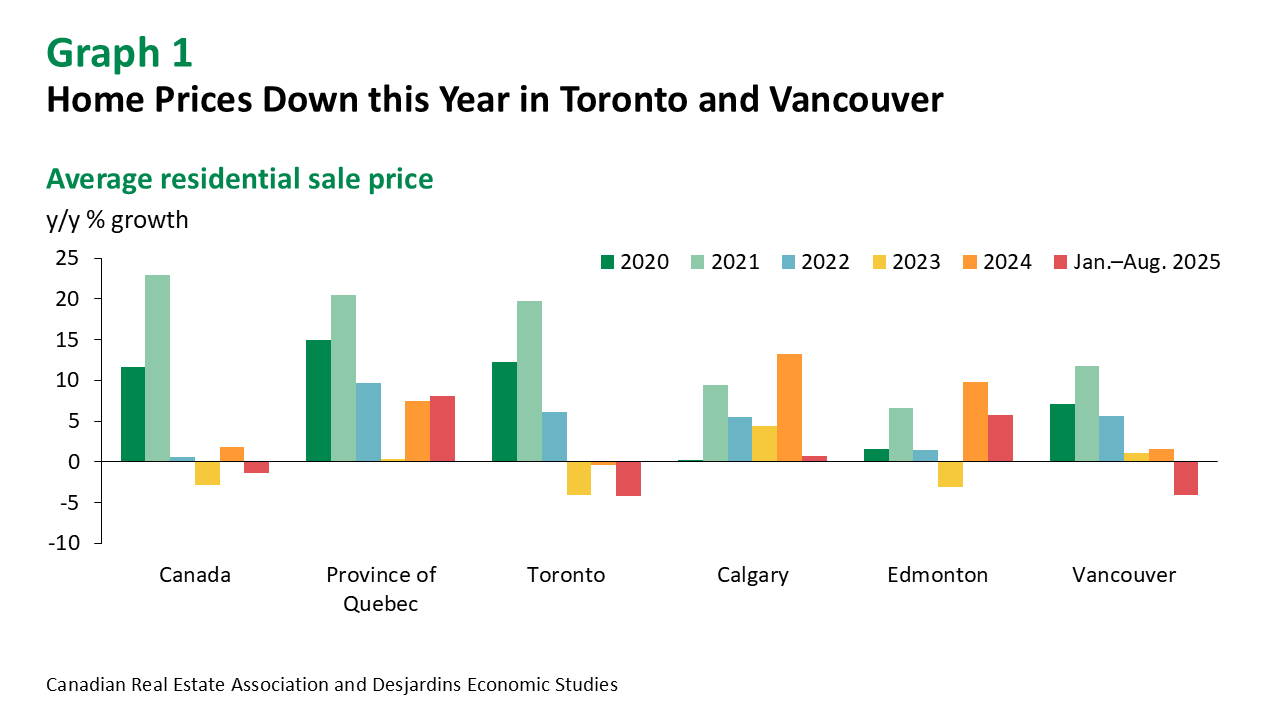
As highlighted in our latest Desjardins Housing Outlook External link., national housing data mask stark regional contrasts. Beneath Canada’s apparent stability, provinces—and even cities within provinces—are moving in different directions, shaped by divergent economic conditions and imbalances in housing demand and supply. Nationally, excess supply in the market kept the seasonally adjusted average sale price and benchmark price little changed in August. They remain about 14% and 18% below their early 2022 peaks, respectively. But August 2025 average sale prices reached new heights for the provinces of Nova Scotia, Quebec, Manitoba, Saskatchewan and Alberta. Indeed, steep price declines in Toronto and Vancouver have had a significant dampening effect on the national average (graph 1).
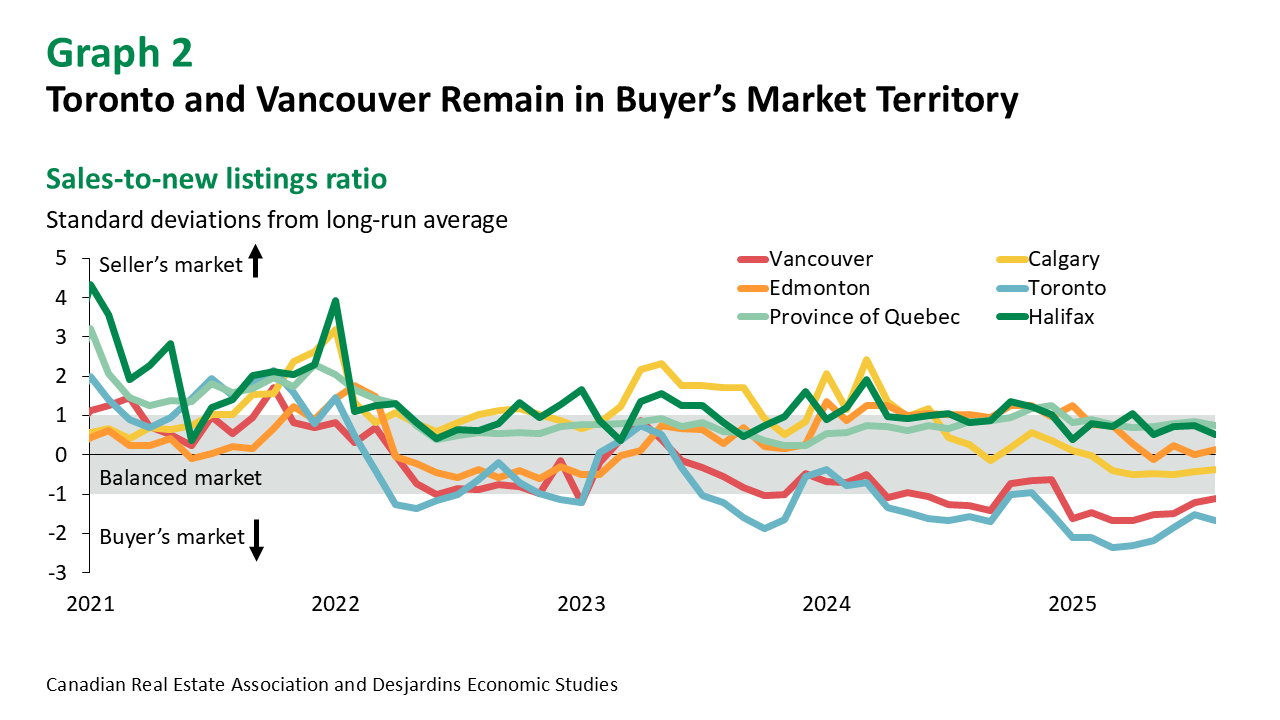
Nationally, new listings increased by 2.6% and inventory held steady at 4.4 months in August—well above its 2019-to-present average of around 3.7 months. The sales-to-new-listings ratio dipped marginally after four months of gains and remains solidly in balanced territory at the national level. Meanwhile, Toronto’s drop in seasonally adjusted home sales last month reversed the city’s climb towards a more balanced market (graph 2). Quebec City’s home sales growth slowed to 0.6% m/m in August and the average selling price slipped by 0.3% m/m, following red hot gains in both earlier in the year. Time will tell whether the city’s housing market has peaked or just paused to catch its breath.
Implications
The Bank of Canada’s July decision External link. to hold rates likely had little impact on August home sales. Looking ahead, we expect the policy rate will decline from 2.75% to 2.00% by year-end to support economic activity. Indeed, the recent removal of retaliatory tariffs External link. on $44B in US imports should result in easing inflation concerns, clearing the way for the Bank to resume rate cuts when they meet this week. Lower borrowing costs, gradually rising household disposable incomes and more affordable home prices paired with greater supply of homes listed for sale could draw sidelined buyers back into the market this fall. However, a softening labour market External link.—with back-to-back monthly job losses topping 100k—could be a significant headwind to the housing market if that weakness persists into the fall.