
- Nom du rédacteur
- Randall Bartlett, Deputy Chief Economist • LJ Valencia, Economist
Essentials of Monetary Policy
The Bank Raised Rates as Expected but It’s Unlikely to Be One and Done
October 28, 2026
According to the Bank of Canada (BoC)
- As expected, the Bank of Canada raised its policy rate by 25 basis points in October 2026 to 2.50%—the first interest rate hike since July 2023.
- In his Press Conference Opening Statement External link., Bank of Canada Governor Tiff Macklem outlined two important economic developments that supported the interest rate decision.
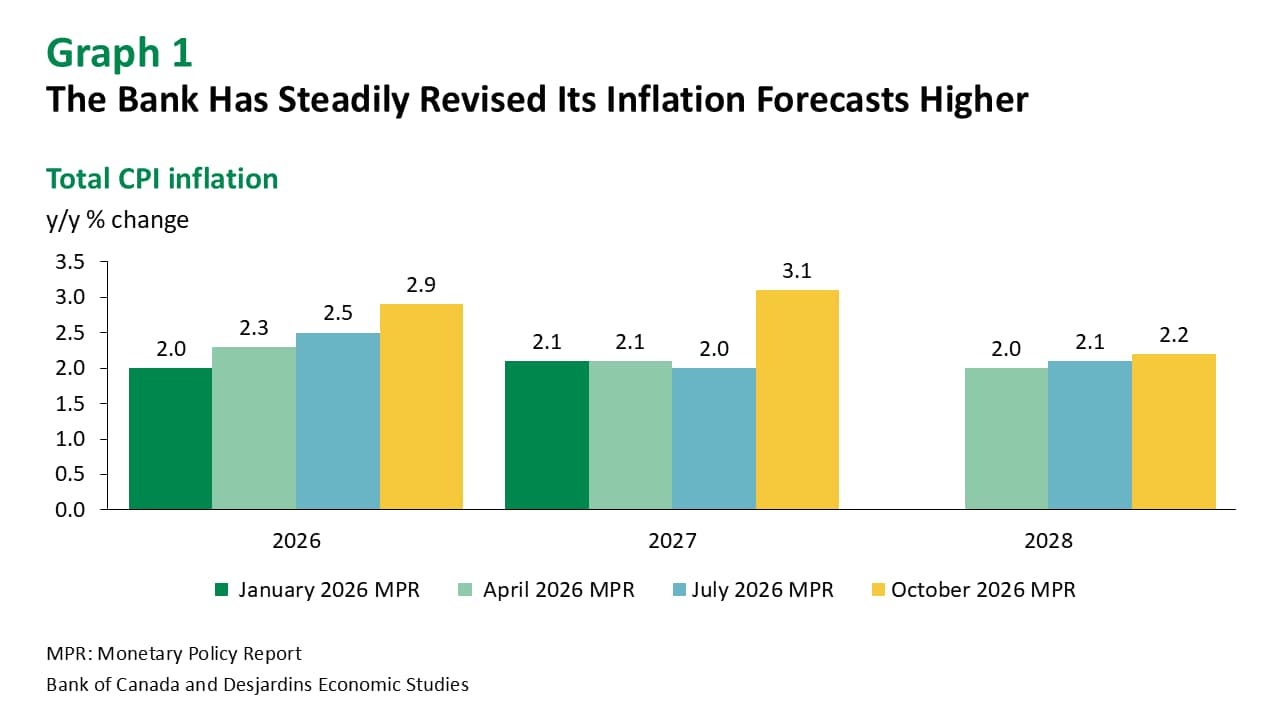
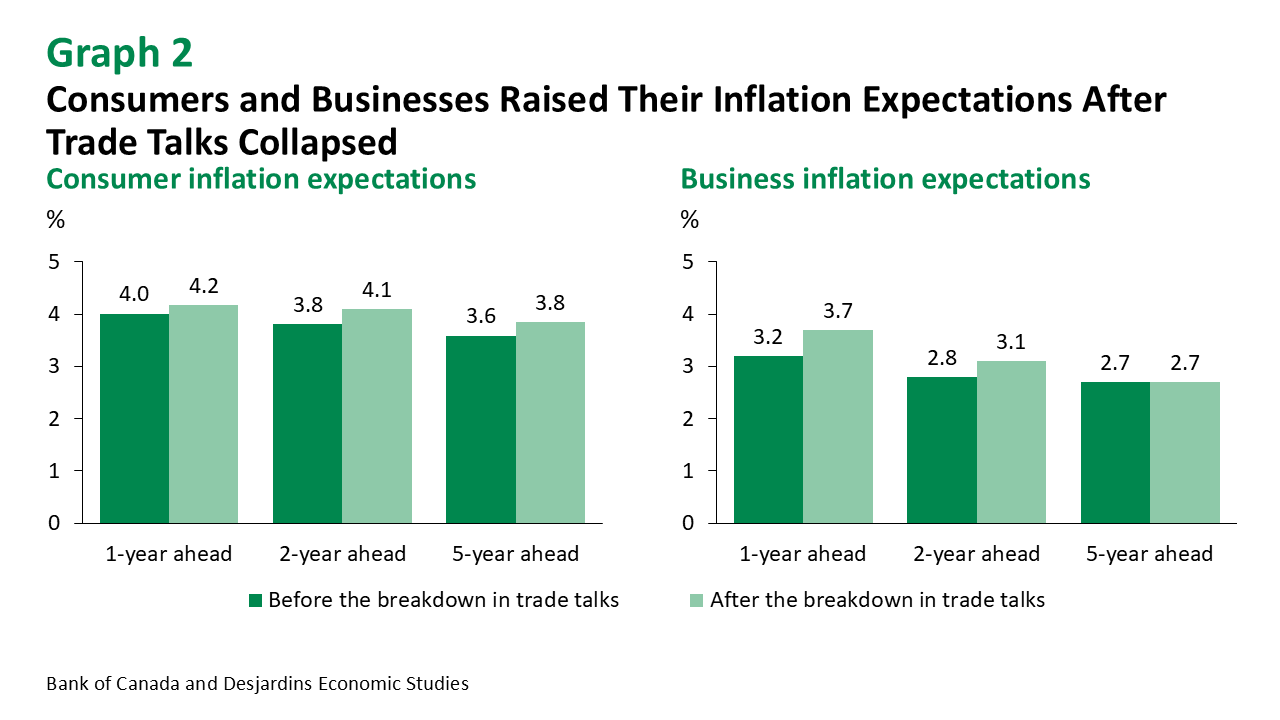
- First, the outlook for inflation has increased substantially. The Bank of Canada now expects inflation to be around 3.4% y/y by the end of 2026 (from 2.4% in July) and remain at or above 3% through much of 2027 (graph 1). This is the result of sustained high energy prices that are now expected to remain elevated for longer, which is hitting consumers directly and raising costs for businesses. And while companies have absorbed much of the higher input prices thus far, the Bank’s most recent Business Outlook Survey suggests that those costs could increasingly be passed on to consumers. Against this backdrop, consumers and businesses have raised their expectations for future inflation (graph 2).
- Second, the Canadian economy has remained resilient despite high inflation and uncertainty around US–Canada trade. Real GDP growth was revised from negative to positive in Q1 2026 and surpassed the Bank’s expectations in Q2, coming in at 3.3% q/q annualized versus the July outlook of 2.5%. Growth in Q3 should come in at around 2.0%. That said, Canada’s economy should advance at a much slower pace in Q4, at 0.8%, because of recent re-escalations in trade tensions. However, the better numbers through 2026 have led the Bank to revise up its real GDP growth outlook for this year to 1.0%. It also revised up its growth forecast modestly for 2027 and 2028 from 1.8% to 2.0% in both years (graph 3).

- According to Governor Macklem, “With elevated inflation expected to last longer and the economy showing resilience, Governing Council agreed that risks to inflation had increased and there was less scope for monetary accommodation. Looking ahead, Governing Council agreed we would take future decisions one meeting at a time. There could be a need to raise the policy rate further, but given the uncertainties, we will proceed carefully.”
Implications
While the interest rate hike in October was almost entirely priced in, the more surprising element of October 2026 MPR was the extent to which the Bank raised its inflation forecast. While higher-for-longer oil prices are largely to blame, a more resilient economy and Canadian counter tariffs (the latter largely unmentioned) also play a role. The BoC leaned meaningfully more hawkish in its tone as well, stressing the possible need for more rate hikes. As such, we continue to expect the Bank will hike once more before it’s finished, with the timing dependent on how the data shape up.
2026 Schedule of Central Bank Meetings
